
Choosing the right web hosting service is an important decision for any website owner. Whether you run a business website, an online store, a blog, or a web application, your hosting environment affects website speed, security, uptime, and overall performance. While shared hosting is a popular starting point, it may not always provide enough resources as a website grows.
This is where Virtual Private Server (VPS) hosting becomes a useful option. It offers a balance between shared hosting and dedicated server hosting by providing dedicated resources within a virtualized server environment.
However, VPS hosting is not the perfect solution for every website. Before making a decision, it is important to understand the pros and cons of VPS hosting, including its costs, technical requirements, security benefits, and limitations.
In this guide, we will explore how VPS hosting works, its main advantages and disadvantages, and the factors you should consider before purchasing a plan.
What Is VPS Hosting?
VPS hosting is a web hosting service that uses virtualization technology to divide a physical server into multiple isolated virtual servers. Each virtual server operates independently and receives an allocated amount of resources, such as CPU, RAM, and storage.
Unlike shared hosting, where multiple websites share a common hosting environment with limited individual control, a VPS provides a more isolated environment with greater control over server settings and applications.
For example, a growing business website may need additional memory, custom software, or specific server configurations. VPS hosting can provide the flexibility needed to manage these requirements without purchasing an entire physical server.
VPS hosting is commonly available in two forms:
- Managed VPS hosting: The hosting provider handles certain server administration tasks, such as updates, monitoring, security configurations, and technical support, depending on the plan.
- Unmanaged VPS hosting: The customer is generally responsible for server configuration, software installation, maintenance, security, and troubleshooting.
Understanding these options is important because the level of management directly affects the cost, workload, and technical skills required.

Pros of VPS Hosting
VPS hosting offers several benefits for websites and applications that require more resources or control than a basic hosting plan can provide.
1. Better Performance and Dedicated Resources
One of the biggest advantages of VPS hosting is access to allocated server resources. CPU, RAM, and storage are assigned to your virtual server according to the selected plan.
This can help maintain more consistent performance compared with shared hosting, where other websites on the same server may affect resource availability.
A VPS can be suitable for websites experiencing increased traffic, online stores handling more transactions, and applications that require additional processing power.
However, performance also depends on the quality of the physical server, virtualization technology, storage type, network capacity, and resource allocation. A poorly configured VPS may not perform better than a well-optimized shared hosting plan.
2. Greater Control Over Server Configuration
VPS hosting provides more control over the server environment. Depending on the plan and operating system, users may receive root or administrator access.
This allows you to install supported software, configure server settings, manage services, and select the applications required for your project.
For example, developers may need a particular PHP version, database configuration, Node.js environment, or custom background service. A VPS can provide the flexibility to configure these components.
This level of control is particularly useful for developers, businesses with custom applications, and website owners with specific technical requirements.
3. Improved Isolation and Security
VPS hosting generally provides better isolation than traditional shared hosting. Each virtual server operates within its own environment, helping separate its processes and resources from those of other customers.
This can reduce certain risks associated with sharing a hosting account environment.
A VPS also allows users to implement additional security measures, such as firewall rules, SSH key authentication, access restrictions, and custom monitoring tools.
However, VPS hosting does not automatically guarantee better security. Users must still apply software updates, configure permissions correctly, secure administrative access, and maintain appropriate backups.
The level of isolation also depends on the virtualization platform and the hosting provider’s security practices.
4. Easy Scalability as Your Website Grows
Another important advantage is the ability to increase resources as your requirements change.
If your website starts receiving more visitors or your application needs additional memory, you may be able to upgrade your VPS plan without migrating to an entirely different hosting environment.
Depending on the provider, upgrades may include additional CPU cores, RAM, storage, or network capacity.
This makes VPS hosting useful for growing businesses that want room to expand without committing to the cost of a dedicated physical server immediately.
Keep in mind that some upgrades require a server restart or migration. Always check how resource upgrades are handled before choosing a provider.
5. More Affordable Than Dedicated Server Hosting
Dedicated server hosting provides an entire physical server to one customer, but it generally comes with a higher price.
VPS hosting offers a middle ground by allowing customers to use a portion of a physical server’s resources within an isolated virtual environment.
This makes it possible to access greater control and allocated resources at a lower cost than many dedicated server plans.
For small businesses, developers, and growing websites, VPS hosting can offer a practical balance between price and functionality.
Nevertheless, the total cost should include more than the advertised monthly price. Managed support, backups, licensing, control panels, and additional storage may increase the overall expense.
6. Suitable for Multiple Applications and Projects
A VPS can host more than one website or application, provided the available resources and software configuration support them.
For example, a developer may use a single VPS to run a business website, a staging environment, and a small application.
Businesses can also configure separate services for databases, internal tools, or testing environments.
This flexibility makes VPS hosting useful for projects that need a customizable server environment. However, hosting multiple applications on one VPS requires careful resource planning, access management, and security configuration.
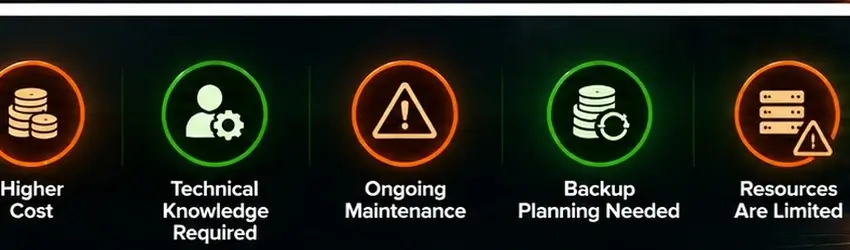
Cons of VPS Hosting
Although VPS hosting offers several benefits, it also introduces responsibilities and limitations that should not be overlooked.
1. Higher Cost Than Shared Hosting
VPS hosting generally costs more than entry-level shared hosting because it provides allocated resources and greater control.
For a new website with low traffic, limited functionality, and no special server requirements, the additional expense may not deliver meaningful benefits.
Costs can also increase when you require managed support, premium backups, a paid control panel, additional storage, or licensed software.
Before purchasing a VPS, compare the complete monthly or annual cost with your actual requirements rather than choosing a plan based only on its advertised price.
2. Requires Technical Knowledge
An unmanaged VPS requires a reasonable understanding of server administration.
Depending on your setup, you may need to manage operating system updates, configure web servers, troubleshoot application errors, monitor resource usage, and investigate performance issues.
Security configuration is another important responsibility. Incorrect firewall rules, outdated software, weak passwords, or misconfigured permissions can expose your server to unnecessary risks.
For users without server management experience, managed VPS hosting may be a better option. The provider handles agreed administrative tasks, allowing you to focus more on your website or business.
Before buying, carefully review what the provider includes under its managed hosting service.
3. Security Is Still Your Responsibility
VPS hosting provides isolation, but it does not remove every security risk.
An incorrectly configured server can still be vulnerable to malware, unauthorized access, software exploits, and denial-of-service attacks.
Users may need to configure firewalls, secure SSH access, install updates, monitor logs, and establish a backup routine. Application-level security also remains important because vulnerable plugins, themes, or scripts can compromise a website even when the server itself is properly maintained.
Managed VPS plans may include some security services, but the exact coverage varies by provider.
Always confirm which security tasks are handled by the host and which remain your responsibility.
4. Resources Are Limited by Your Plan
Although VPS hosting offers allocated resources, these resources are not unlimited.
A plan with insufficient RAM or CPU capacity may struggle during traffic spikes or when running resource-intensive applications. Storage limits can also become a problem as databases, media files, and backups grow.
In addition, the physical server’s overall capacity and the hosting provider’s infrastructure can influence performance.
Choosing the cheapest VPS plan without evaluating your workload may lead to slow response times and frequent resource limitations.
Review your current resource usage and expected growth before selecting a configuration. It is also helpful to understand the provider’s upgrade options.
5. Server Maintenance Takes Time
Running a VPS involves ongoing maintenance, particularly with unmanaged plans.
Operating system updates, application patches, security checks, backups, and performance monitoring require regular attention. You may also need to troubleshoot failed services or investigate unexpected downtime.
For businesses without an in-house technical team, these tasks can take valuable time away from core operations.
Managed VPS hosting can reduce this workload, but you should confirm the provider’s maintenance responsibilities, support availability, and response times before purchasing.
6. Backups and Disaster Recovery Need Planning
Not every VPS plan includes automatic backups or complete disaster recovery services.
If your server fails, files become corrupted, or an application is compromised, having a recent backup can make recovery much easier.
However, storing backups only on the same VPS may leave them vulnerable if the server or its storage becomes unavailable.
A better approach is to maintain separate backups, test restoration procedures, and define how frequently important data should be backed up.
Before buying, check whether backups are included, how long they are retained, whether restoration costs extra, and whether you can download or export your data.
VPS Hosting vs Shared Hosting vs Dedicated Hosting
Understanding the differences between hosting types can help you select a suitable solution.
The right option depends on your website’s size, traffic, technical requirements, budget, and management capabilities. Dedicated hosting is not automatically necessary for a high-traffic website, just as VPS hosting is not always necessary for a small business website.
How to Choose the Right VPS Hosting Plan
Before purchasing VPS hosting, evaluate the following factors.
1. CPU and RAM: Choose resources based on your website traffic, application requirements, database workload, and expected growth. Resource-heavy applications may need more memory and processing power.
2. Storage type and capacity: SSD or NVMe storage can improve disk performance, but capacity matters too. Ensure the plan has enough room for application files, databases, logs, and other data.
3. Operating system: Select an operating system that supports your applications and technical requirements. Linux distributions and Windows Server may have different licensing, administration, and compatibility considerations.
4. Managed or unmanaged service: Choose managed hosting if you need assistance with server administration. An unmanaged VPS may suit experienced users who want greater administrative control.
5. Security and backups: Review available firewall protection, backup frequency, recovery options, monitoring, and security support.
6. Network and uptime: Evaluate network quality, published uptime commitments, data centre locations, and the provider’s support process during service interruptions.
7. Upgrade flexibility: Confirm whether you can increase CPU, RAM, and storage as your workload grows, and understand whether upgrades involve downtime.
8. Total cost: Compare the renewal price, software licenses, support, backup services, and any additional fees rather than considering the introductory price alone.
These factors can help you avoid paying for unnecessary resources or selecting a plan that cannot support your requirements.
Is VPS Hosting Worth It?
VPS hosting can be worth the investment when your website or application requires more control, predictable resource allocation, or flexibility than your current hosting plan provides.
It may be a good fit for growing business websites, e-commerce stores, development environments, web applications, and projects that need custom server configurations.
On the other hand, shared hosting may be sufficient for a new blog, a basic portfolio, or a small website with modest traffic. Dedicated hosting may be more appropriate for workloads that require extensive physical resources, specialized hardware, or greater infrastructure control.
The decision should be based on your actual needs rather than the assumption that a more expensive hosting plan will always produce better results.
If you are unsure, start by reviewing your current traffic, resource usage, technical requirements, and expected growth. Then compare the available plans against those needs.
Frequently Asked Questions
- Is VPS hosting better than shared hosting?
- What are the main disadvantages of VPS hosting?
The main disadvantages include higher costs than shared hosting, technical management requirements, limited resources within each plan, ongoing maintenance, and the need to plan for security and backups.
- How much RAM do I need for VPS hosting?
The amount of RAM depends on your operating system, application stack, database, and traffic. A lightweight website may operate with a small amount of memory, while busy applications or multiple services may require considerably more. Monitor actual usage before upgrading.
- Is VPS hosting suitable for beginners?
Yes, beginners can use VPS hosting, particularly when choosing a managed plan with suitable technical support. Unmanaged VPS hosting is generally better suited to users who are comfortable with server administration.
- Can I upgrade my VPS hosting plan later?
Most VPS providers offer some form of resource upgrade, although the available options and process vary. Check whether CPU, RAM, and storage can be increased independently and whether an upgrade requires downtime or migration.
Conclusion VPS hosting offers a useful balance between affordability, control, performance, and scalability. Its main advantages include allocated resources, greater customization, improved isolation, and the flexibility to support growing websites and applications. However, the higher cost, technical responsibilities, security requirements, and resource limitations make it important to evaluate your needs carefully. Before purchasing a VPS, compare the available plans, review the management and backup services, and consider the total cost of ownership. By understanding the pros and cons of VPS hosting, you can choose a solution that supports your website today while leaving room for future growth.
